
How to Search Civil Dockets
MiCOURT Case Search is the place to begin. Select the Monroe County court first. Then enter a name or a case number. The name search starts with Last Name or Business. Optional fields include first name, middle name, and birth year. A case number works differently. The search splits it into year, number, and type. Before treating any result as your case, compare the Monroe County court, the case type, dates, and status against what you already know.
Remember that MiCOURT is informational, not the official Monroe County file. The result may confirm the case but not the document. The next step is the clerk who holds that file. A complete case number plus the document's name helps the clerk route your inspection or copy request quickly.
- Identify whether the Monroe County matter is likely in D01 or C38.
- Select that Monroe County court in MiCOURT.
- Search the Monroe County record by business or party name, or by year, number, and type.
- Compare Monroe County case type, filing date, status, and public events.
- Use the responsible Monroe County clerk for documents, inspection, or certification.
Note: MiCOURT can locate a Monroe County public case, but the Monroe County clerk controls access to filed documents and certified copies.
Monroe County Civil Court Choices
Pick the court before you pick a search field. Monroe County D01 is the 1st District Court. It handles civil claims within district jurisdiction, small claims, garnishments, summary proceedings, and related filings. Monroe County C38 is the 38th Circuit Court. It holds original jurisdiction over civil actions above $25,000, and it includes the Monroe County Family Division. The court code on any docket entry helps confirm which records office to contact.
| Court | Civil docket scope | Records route |
|---|---|---|
| Monroe County D01 | Monroe County district civil cases, small claims, garnishments, summary proceedings, and related filings | Monroe County D01 Civil Division and its public register selection |
| Monroe County C38 | Monroe County civil cases over $25,000, appeals from D01, and Family Division matters | Monroe County Clerk as Monroe County Circuit Clerk and the circuit selection |
The Monroe County C38 Family Division source explains what the division covers and how to reach it.
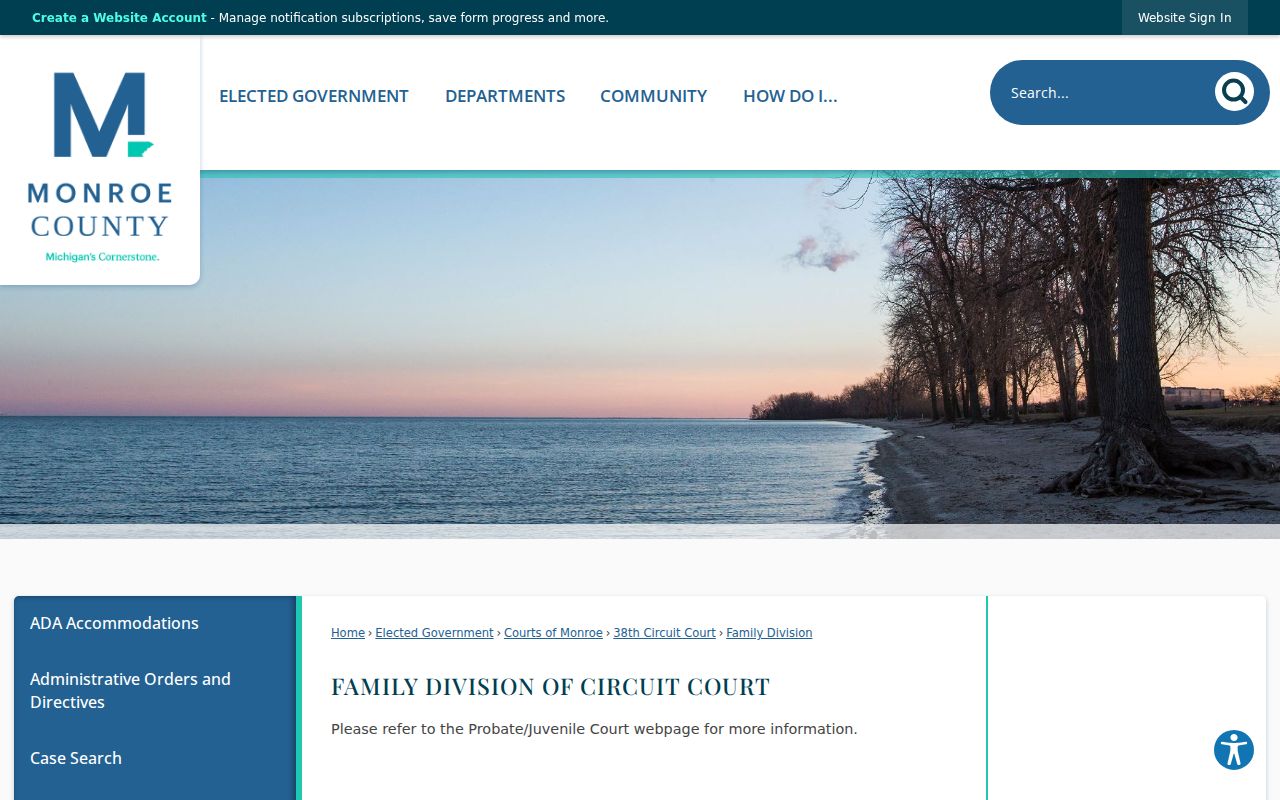
Monroe County Family files follow special confidentiality rules, so a general public name search should not be treated as a complete Monroe County record check.
What a Civil Docket Shows
A Monroe County civil docket entry can show a lot. The court, case number, case type, filing date, status, party roles, public attorney labels, and assigned judge all appear. Motions, events, and hearing information may appear too. A judgment or order entry date can show up as well. But the docket records activity only. It does not hand you the full complaint. It skips the motion, an attachment, a signed order, or anything protected from public view.
| Monroe County case identifier | The Monroe County court's case number and case type, preserved exactly for Monroe County clerk follow-up. |
|---|---|
| Monroe County parties and roles | Monroe County public labels such as plaintiff, defendant, petitioner, or respondent when displayed. |
| Monroe County events and motions | Monroe County chronological entries showing that an event or motion was recorded, not that the request was granted. |
| Monroe County setting information | A Monroe County hearing date or result when public. The Monroe County filed order controls where exact terms matter. |
| Monroe County judgment or order | A Monroe County entry date or public status may appear, but a signed document must be requested from the Monroe County clerk if needed. |
Keep three Monroe County dates straight: the filing date, the hearing date, and the judgment date. Each marks a different step in a civil case.
Monroe County Civil Filing Channels
MiFILE is Michigan's electronic filing system, not a Monroe County public docket reader. Attorneys must use it. The Monroe County D01 Civil Division says that rule has applied since June 12, 2025. Self-represented filers have more options. MiFILE, mail, the courthouse drop box, and the clerk's office all work. Email and fax do not work. D01 accepts no court filings that way. Filing a document and searching the public register are two separate tasks.
The Monroe County D01 Civil Division instructions lay out the local filing paths.
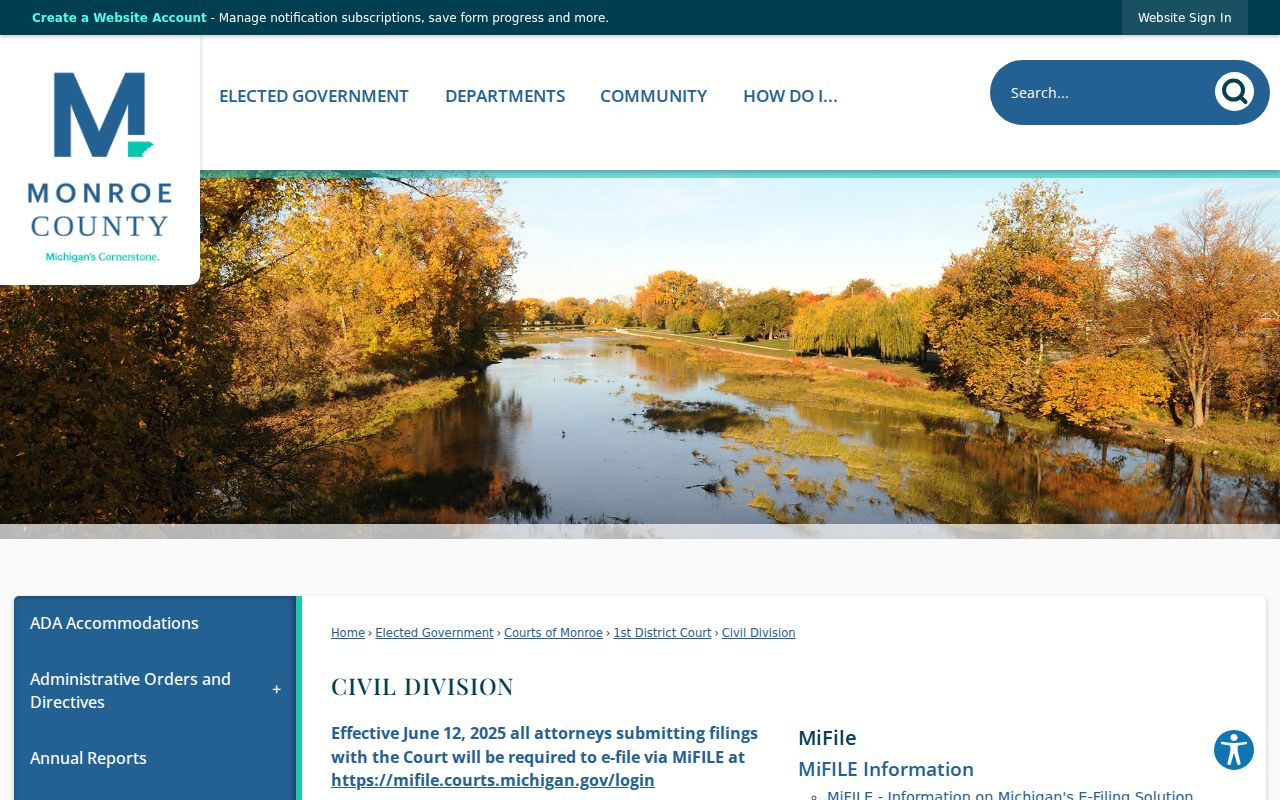
The permitted Monroe County filing path changes with the filer type, while public docket access stays a separate task. That distinction matters. MiFILE's sign-in page is where an authorized filer starts.
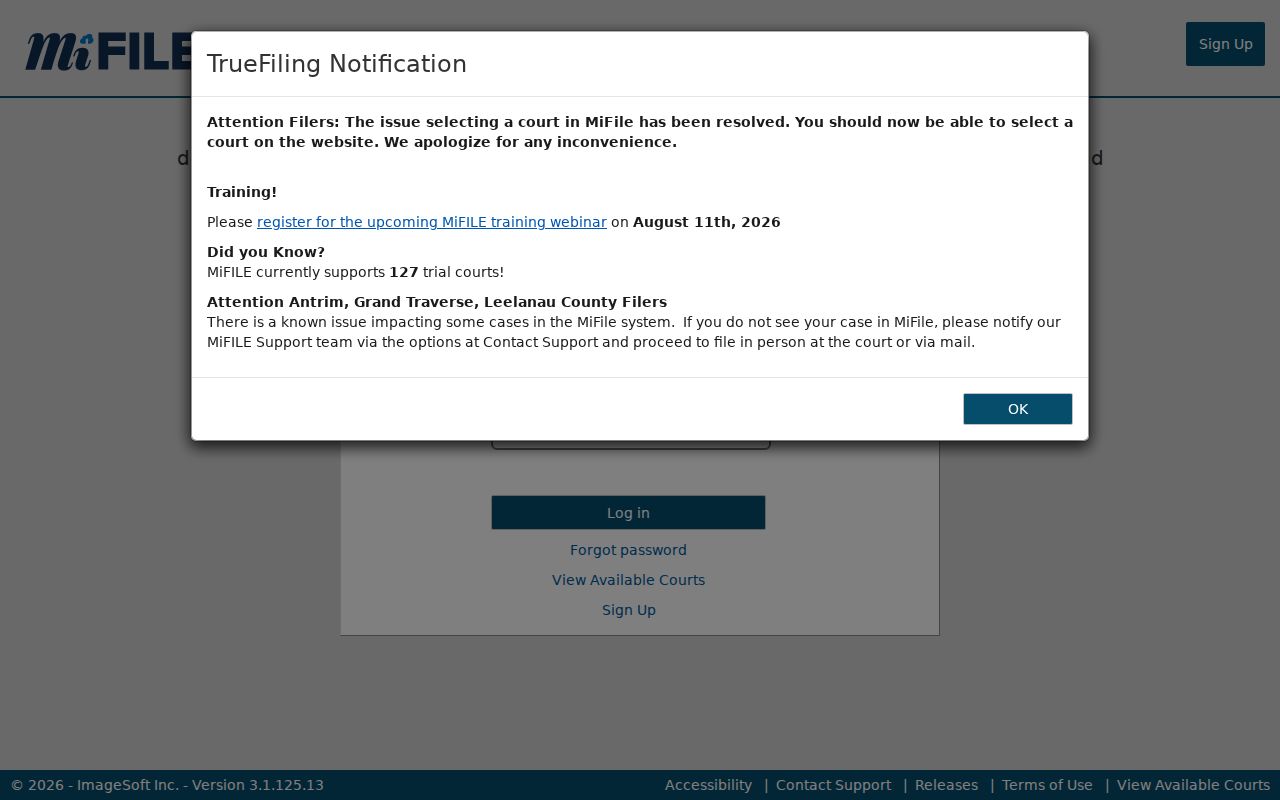
Having a MiFILE account does not create a public document-search function for a Monroe County civil docket. Note: the account helps eligible users file, but it is no substitute for a civil docket search. The available-courts list shows D01 participation for general civil, small claims, and summary-proceeding case types.
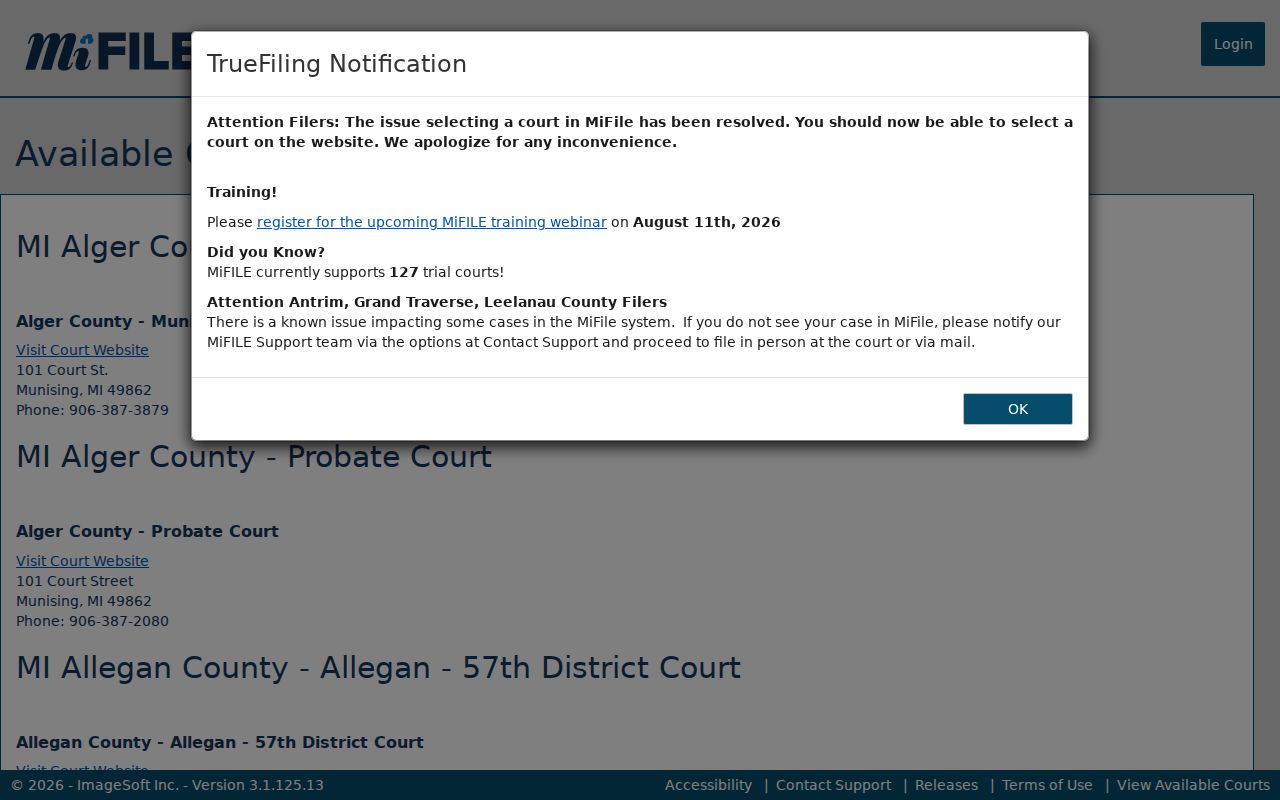
Check the current available-courts information to confirm your filing category is supported before starting an electronic submission.
Types of Civil Cases on the Docket
D01's civil jurisdiction covers civil claims, small claims, garnishments, summary proceedings, claim-and-delivery matters, and related process. C38 handles original civil actions above its jurisdictional threshold plus appeals from D01. The case-type label on a docket helps identify the track, but it cannot tell you the amount at issue or the final result. Only the filed record can do that.
Learn the vocabulary, too. A garnishment is a post-judgment collection procedure. A motion is a request for court action, not a ruling. A judgment is a court-entered decision. All three can appear in one case history while marking very different stages, and public family records deserve extra care because some materials carry special access limits.
Monroe County Civil Case Fee Checks
Monroe's D01 civil fee table offers local checkpoints, not a promise that every filing costs the same. It lists general civil filing bands plus a $10 e-file addition, among other items. Schedules can change, so confirm the current fee with D01 before filing or requesting service.
| D01 filing item | Local listed fee |
|---|---|
| General civil up to $600 | $25 plus $10 e-file |
| General civil $601 to $1,750 | $45 plus $10 e-file |
| General civil $1,751 to $10,000 | $65 plus $10 e-file |
| General civil over $10,000 | $115 plus $10 e-file |
| Motion | $20 |
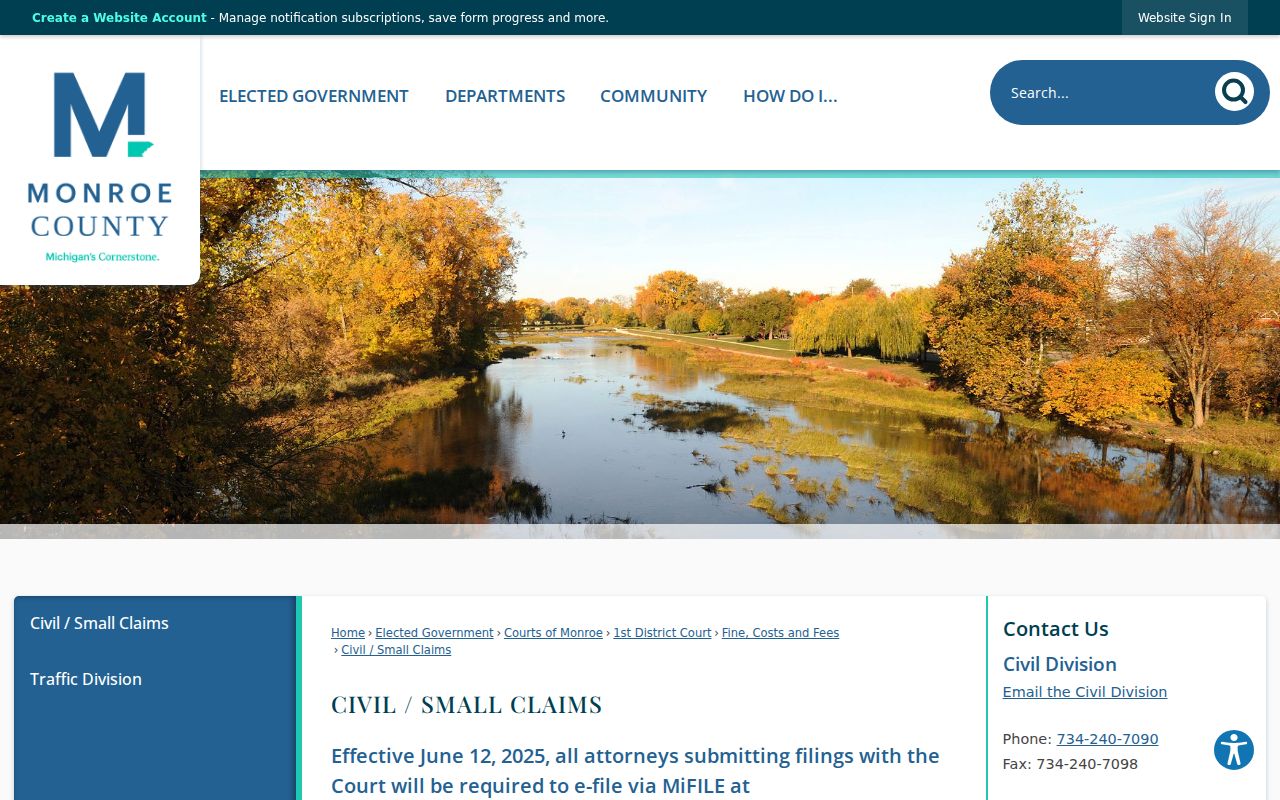
The Monroe civil and small-claims page is the local source for categories and fees.
Rely on the live county schedule instead of a docket label when calculating a filing cost. Note: the listed figures are local fee-table checkpoints, so confirm the current charge with D01 before submitting a filing.
Settings and Hearings on Civil Dockets
A civil setting is a court date on the schedule, nothing more. A docket entry might list the hearing date and time. It might also show a judge label, a motion, or a later result where the court makes that public. That line is not an order. It does not prove anyone held the hearing. Read the whole case chronology. When the exact action matters, ask the clerk for the filed document itself.
Phone routing for D01 civil matters goes through 734-240-7090, while 734-240-7075 serves as the general D01 number. The Monroe County court calendar page covers what the public scheduled-event display shows and where it stops. A C38 matter belongs with the Circuit Clerk, so do not treat a D01 calendar result as controlling.
Monroe County Civil Settings and Orders
A hearing line and a signed order are two different records. A hearing can be set, moved, or listed. No result may show on the public register. A motion entry only records a request. An order or judgment entry tells you the court acted. But the controlling text lives in the document itself. Keeping that difference straight stops a reader from reading a calendar line as a decision.
The public result may fall short. Then gather the court code, the full case number, a date range, and the exact document you need. The clerk can tell you whether the item is public, open to inspection, or available as a copy.
Public Access to Civil Dockets
Monroe's 2025 joint court-records order splits access two ways. Register information is open through a public website. Other public case-record information may be supplied electronically on request. MCR 8.119 controls access, inspection, copies, and sealing of court case records. Michigan FOIA does not reach court case records. A county FOIA request will not get around a court-file restriction.
The open routes include MiCOURT for the public register, the responsible clerk in person, phone routing, mail or drop-box delivery where accepted, court-approved electronic requests, and certified copies for documents the clerk identifies as certifiable. The local form asks whether you want to review the file or get copies. It allows a request for the complete public file or for particular records.
Note: A records request should identify the court and the record sought, because a public register entry is not the full case file.
Monroe County Civil Records Requests
A focused request lets the clerk find the civil record fast, without guessing at access. Name the court and its court code. Give the complete case number too. Add the document, the date range, whether you want inspection or copies, and how delivery should work. The local form's court-use section prices copies at $1 per page. Certified orders and other court products can carry separate fees, so confirm before you count on a number.
Michigan law does not require a requester's name and address, though the form asks for them to help processing. Leave protected personal information out of any public example. Never assume a public case makes every attachment public too.
Monroe County Civil Small Claims Limits
Monroe's D01 page shows local small-claims filing bands reaching $6,500. It also adds a $5 e-file amount. Michigan's statewide threshold information says $7,000 beginning January 1, 2024. The two figures do not line up. Confirm the current limit and fee with D01 before filing. Do not take the answer from a search result or an older form.
That gap is a filing question, not a docket-search rule. A public docket can show that a small-claims case exists. It will not settle which threshold applies.
Monroe County Civil Privacy Boundaries
MCR 1.109 shields personal identifying information in court filings. It covers Social Security and national-identification numbers, driver-license and state-ID numbers, passport numbers, dates of birth, and financial-account details. A case appearing on the public register is not permission to republish that data. Redaction and restricted-document rules stay with the court even when the case is visible. The Michigan court redaction guidance spells out that boundary. Some items are nonpublic or sealed. For those, ask the responsible clerk. Do not piece an answer together from an incomplete public listing.
Monroe County Civil Family Records
The C38 Family Division covers domestic relations, personal protection orders, child-protective proceedings, and juvenile delinquency. Several of those categories carry special confidentiality limits. Some never appear on MiCOURT public display at all. A Family Division record question goes through the Circuit Clerk or the Family Division office. It does not go through D01 civil.
Open access to a civil docket has limits. It does not lift an order-based or statutory limit on a particular record. If a search misses a family matter you expected, the next step is clerk routing. It is too soon to conclude that no court record exists.